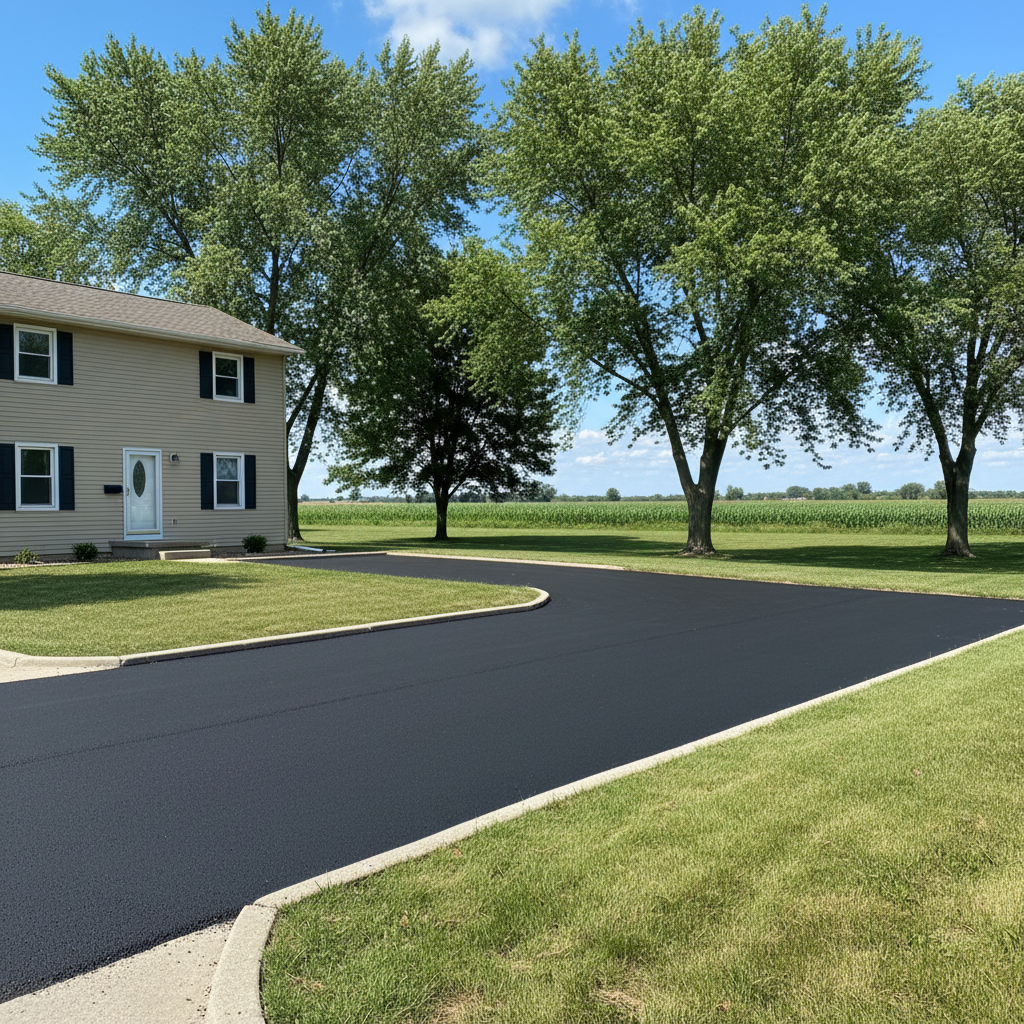
Alright, let's talk about commercial asphalt. If you own a business here in Le Roy, whether it's a shop downtown, a small manufacturing plant out by the highway, or an apartment complex, your parking lot or access road is probably one of the first things people see. A beat-up, pothole-ridden lot doesn't exactly scream 'professional,' does it? So, when it's time to fix it up or put in something new, one of the first questions I get is always, 'What's this going to cost me?'
What Makes Commercial Asphalt Prices Go Up (or Down)?
It's not as simple as a flat rate per square foot, though we often talk in those terms for quick estimates. There are a bunch of factors that play into the final price. Think of it like building a house; the size is a big deal, but so is the foundation, the materials, and how much work needs to happen before you even pour the concrete.
- Size and Scope: This is the obvious one. A 5,000 sq ft parking lot is going to cost less than a 50,000 sq ft one. But it's not just the total square footage. Are we doing a full tear-out and replace? Just an overlay? Patching some potholes? Each of those is a different animal.
- Existing Conditions: This is huge. If your current asphalt is totally shot, with alligator cracking everywhere and a failing base, we're probably looking at a full removal and replacement. That means more labor, more material for the new base, and more disposal costs. If the base is still solid, maybe we can just mill off the top layer and put down new asphalt, which saves you a lot of money. The soil conditions around here, especially in some of the older parts of town with a lot of clay, can also make a difference. If the subgrade isn't stable, we might need to do extra work to stabilize it before we even think about laying stone.
- Asphalt Thickness: Commercial jobs usually need thicker asphalt than residential driveways. A typical parking lot might be 2-3 inches of asphalt over 6-8 inches of compacted aggregate base. A heavy-duty truck lot? You might be looking at 4-6 inches of asphalt over 10-12 inches of base. More material means more cost.
- Accessibility: Is your lot easy to get to with big trucks and paving equipment? Or is it tight, requiring smaller machines and more hand work? Tricky access can add to labor costs.
- Drainage: Proper drainage is non-negotiable. If water sits on your asphalt, it's going to break down fast. Sometimes, we need to install new drains, catch basins, or adjust grades. That's an extra cost, but it's an investment that pays off by extending the life of your pavement.
- Prep Work: This goes beyond just clearing the site. It includes things like grading, compacting the subgrade, and laying down a proper stone base. Skimping here is a recipe for disaster.
- Striping and Markings: Once the asphalt is down, you'll need lines for parking spaces, arrows, handicap symbols, and fire lanes. That's a separate service, usually priced per linear foot or per symbol.
Typical Cost Ranges for Commercial Asphalt in Le Roy
Okay, you want numbers. I get it. Keep in mind these are averages, and your specific project could be higher or lower based on all those factors I just mentioned. These numbers are for a decent-sized commercial job, not a tiny patch.
- New Construction (Full Depth): This is for a brand new parking lot or access road where there's nothing there now, or we're doing a full tear-out. You're generally looking at $6.00 to $10.00 per square foot. This includes excavation, grading, a good stone base (6-8 inches), and 2-3 inches of compacted asphalt. For heavy-duty areas with thicker asphalt and base, it can push past $10.00.
- Asphalt Overlay (Resurfacing): If your base is still good, but the top layer of asphalt is showing its age, an overlay is a great option. We might mill off an inch or two of the old asphalt first, then put down 1.5-2 inches of new asphalt. This usually runs about $3.00 to $5.50 per square foot.
- Patching and Repair: This varies wildly depending on the size and depth of the patches. Small pothole repairs might be a few hundred bucks. Larger sections that need saw-cutting and removal could be $10-$20 per square foot for the repaired area, but it's usually quoted as a lump sum or minimum charge.
- Sealcoating: This isn't paving, but it's essential for protecting your investment. For commercial lots, you're looking at around $0.25 to $0.50 per square foot, depending on the size and condition of the lot.
- Striping: Expect to pay anywhere from $0.25 to $0.50 per linear foot for standard parking lines, and $50-$150 per symbol (handicap, arrows, etc.).
So, for a 10,000 sq ft parking lot needing a full tear-out and replace, you could be looking at $60,000 to $100,000. An overlay for the same size lot might be $30,000 to $55,000.
What Should Be Included in a Quote?
When you get a quote from Classic Asphalt Solutions, or anyone else, make sure it's detailed. A good quote should clearly break down:
- Preparation: Excavation, grading, subgrade compaction, stone base installation (including thickness).
- Asphalt: Type of asphalt mix, number of lifts (layers), and final compacted thickness.
- Drainage: Any new drains, catch basins, or adjustments.
- Cleanup and Disposal: What happens to the old material? Is it included?
- Traffic Control: How will they manage access during the work?
- Warranty: What kind of guarantee are they offering on their work?
- Striping: Is it included, or a separate line item?
Don't just look at the bottom line. Understand what you're paying for.
How to Avoid Overpaying (or Getting Ripped Off)
This is where your due diligence comes in.
- Get Multiple Bids: Always get at least three quotes. But don't just pick the cheapest one. Compare what's included in each bid. A super low bid might be cutting corners somewhere – thinner asphalt, less base, or cheap materials.
- Check References and Reviews: Ask for local commercial references. Drive by some of their previous jobs. Look for online reviews.
- Verify Insurance and Licensing: Make sure the contractor is properly insured and licensed. You don't want to be liable if something goes wrong on your property.
- Ask About Materials: What kind of asphalt mix are they using? Where are they getting their materials? Reputable contractors use quality materials from trusted suppliers.
- Understand the Warranty: A good contractor will stand behind their work. Ask about the length and coverage of their warranty.
- Don't Rush: Don't let anyone pressure you into making a quick decision. Take your time to review the quotes and ask questions.
Your commercial asphalt is a big investment, and it's worth doing right. A well-maintained lot makes a good impression, keeps your customers and employees safe, and saves you money in the long run by avoiding major repairs down the road. If you're in Le Roy or the surrounding areas and need a hand figuring out your next asphalt project, give us a call at Classic Asphalt Solutions. We're happy to walk you through it.