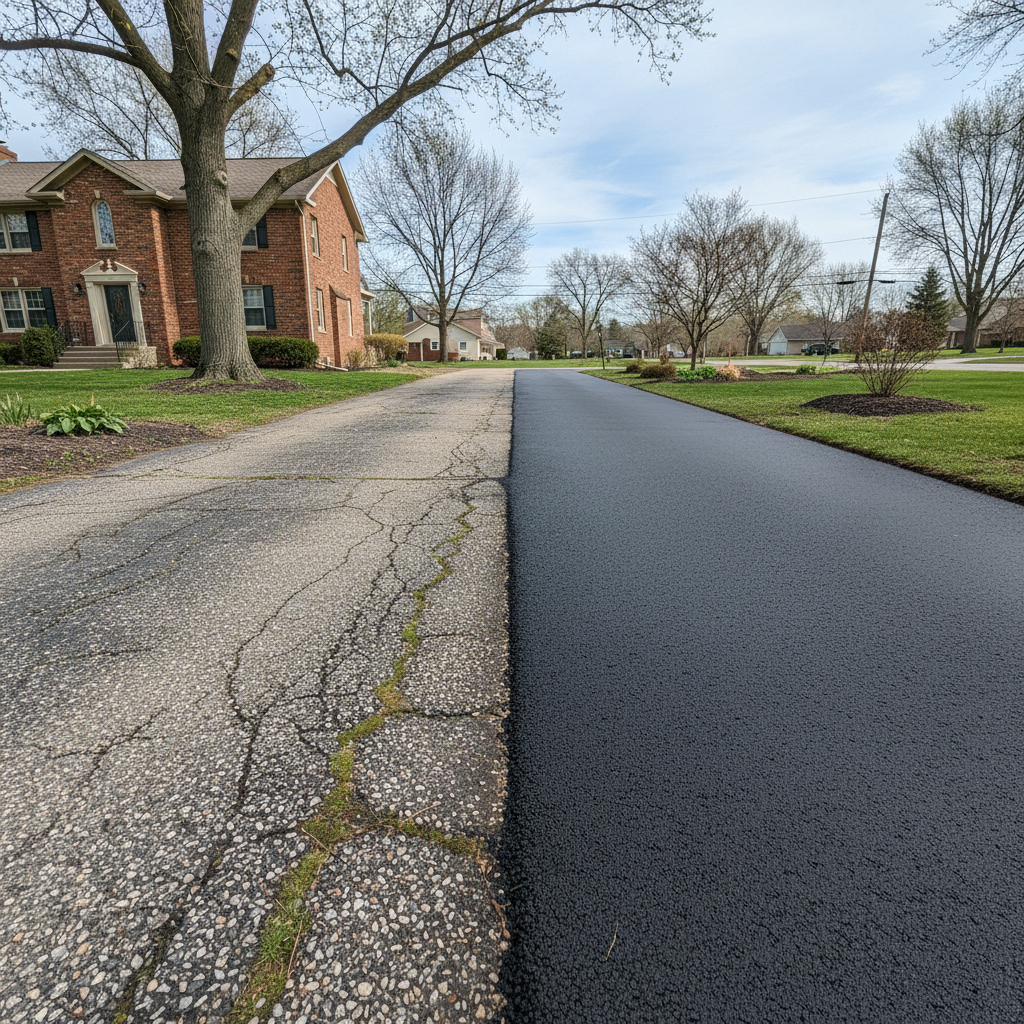
So, you're thinking about a new driveway, huh? That's a pretty big decision. Maybe your old one's practically falling apart, or maybe you're finally putting in that dream garage. Whatever the reason, you're probably weighing your options: asphalt or concrete? It's a question I hear all the time here in Le Roy, and honestly, there's no single 'best' answer for everyone. But I can tell you what I've seen work and what definitely doesn't, especially with our crazy Illinois weather.
Initial Cost: What Hits Your Wallet First?
Let's talk about money, because that's usually the first thing on people's minds. Generally speaking, asphalt is almost always cheaper upfront than concrete. We're talking a pretty significant difference per square foot. That's because the materials themselves cost less, and the installation process can be a bit quicker, needing less labor. If you're on a tighter budget and need a new driveway now, asphalt is usually the more wallet-friendly option to get things started.
Concrete, on the other hand, needs more specialized labor, and the materials cost more. Plus, it takes longer to cure properly before you can even drive on it. So, while you might save some cash initially with asphalt, that's not the whole story.
Durability & Our Illinois Weather
This is where things really get interesting, especially around here. Our winters are brutal, right? Freezing, thawing, snow, ice, salt — it all takes a toll. And our summers get scorching hot. Both materials react differently to these extremes.
Asphalt is more flexible. It can handle those freeze-thaw cycles a bit better than concrete without cracking as easily. Think about how roads are built; they're almost always asphalt for a reason. It moves with the ground. That flexibility, though, means it can soften in extreme heat, and heavy loads can leave ruts if it's not properly installed or maintained. A good, thick base is absolutely critical for asphalt in areas like the old farmsteads around Le Roy, where the soil can be pretty clay-heavy and shift a lot.
Concrete is super strong and rigid. It can bear heavy loads without rutting. But that rigidity is also its weakness in our climate. When water seeps into those tiny cracks and freezes, it expands, pushing the concrete apart. That's how you get those big, ugly spalling issues or entire slabs heaving. You really need good expansion joints and a solid sub-base to help concrete survive our winters.
Maintenance: What's the Long-Term Commitment?
This is where asphalt demands a bit more attention, but it's usually simpler work. For asphalt, you're looking at sealcoating every 2-3 years. That's like putting sunscreen on your driveway; it protects it from UV rays, water, and chemicals, keeping it flexible and looking good. It's a relatively inexpensive process, and it extends your driveway's life significantly. You might also need to fill cracks as they pop up, which is pretty easy to do.
Concrete is often seen as lower maintenance, and in some ways it is. You don't sealcoat it every few years like asphalt. However, when concrete *does* fail, it's usually a bigger, more expensive fix. We're talking about replacing entire sections, which can be a real headache. You also need to keep those expansion joints clean and filled to prevent water from getting in. And if you spill oil or other fluids, concrete stains a lot easier than asphalt.
Appearance: What Look Are You Going For?
Appearance is subjective, of course. Asphalt gives you that classic, deep black look. It's smooth and uniform. Some people love that clean, dark contrast with their landscaping or house color. Over time, with sealcoating, you can keep that fresh look.
Concrete offers more versatility. You can get it in different finishes – brushed, stamped, colored. It has a lighter, brighter aesthetic that some homeowners prefer. If you're going for a very specific architectural look or want something decorative, concrete gives you more options. Just remember, those fancy finishes often add to the cost.
My Recommendation for Le Roy Homeowners
Given our specific conditions here in Le Roy – those wild temperature swings, the heavy snow, and the general wear and tear – I lean towards asphalt for most residential driveways. Here's why:
- Flexibility: It handles our freeze-thaw cycles better, meaning fewer major cracks and heaving issues over the long haul.
- Repairability: Asphalt is much easier and cheaper to repair. Potholes and cracks can be patched seamlessly. If a section of concrete goes bad, you're often looking at tearing out and replacing a whole slab.
- Cost-Effectiveness: While it needs regular sealcoating, the overall lifecycle cost, considering initial installation and typical repairs, often makes asphalt the more economical choice for the average homeowner.
Now, don't get me wrong, a well-installed and properly maintained concrete driveway can last a long time. But for the typical Le Roy homeowner who wants a durable, cost-effective solution that stands up to our climate without breaking the bank on future repairs, asphalt is usually the smarter bet. Just make sure you're getting a good, thick base and a quality paving job. That's where Classic Asphalt Solutions comes in – we make sure it's done right the first time so you don't have to worry about it.